


|
|






Magnesium is important for over 300 body processes and can have an effect on virtually every organ system within the body. Therefore, it is important to be sure that your body gets adequate daily amounts.
This macro mineral is a co-factor for over 300 enzymes in the body, and acts in concert with calcium to support cell, tissue, and organ functions. It is also a vital catalyst in the activity of those enzymes involved in energy production.
Though there are several types of magnesium available, magnesium citrate is ideal for those needing a product which absorbs easily. The chelated mineral, citric acid, helps bind to magnesium and improves absorption. This form of magnesium is often used for conditions related to nerve function, muscle function, and those with difficulty absorbing magnesium from other sources.
When taken in a 1:1 ratio, magnesium citrate also works with calcium and Vitamin D3 to reduce the symptoms of PMS, such as tender breasts, anxiety, fatigue, and bloating.
Why is the American diet so low in magnesium? Magnesium is rarely added back to the soils in synthetic fertilizers, despite the fact that crops continually lower soil magnesium. This is because magnesium is the center of the chlorophyll molecule. It is not added back to our foods after processing either.
For example, 99% of the magnesium in sugarcane is lost when it is refined into white sugar, while 80 - 96% of the magnesium content of wheat is removed when it is refined into white flour. But magnesium is not added back into so-called enriched flour.1 Fats (e.g. butter, margarine, oils, shortenings) contain no magnesium, and meat and dairy products are generally poor sources of magnesium.1 When vegetables are cooked, 50% of their magnesium may be lost in the cooking water. Therefore, the typical American diet can put one at risk for a magnesium deficiency.
Additionally, those eating a diet high in dairy and low in whole foods have an increased need for magnesium, as dairy typically contains a ratio of 10 parts calcium to 1 part magnesium.
More than 70% of women do not get the minimum Recommended Daily Allowance (RDA) of magnesium from their diets. According to the United States Department of Agriculture, low magnesium levels in postmenopausal women can lead to changes in heart rhythm, impaired glucose tolerance, and a decrease in serum cholesterol. For more information, see: Dietary Magnesium Deficiency in Postmenopausal Women - Grand Forks Research Center.
There are many different symptoms that can result from a magnesium deficiency. When magnesium levels are low, metabolic functions are affected, and the stress this causes on the body can lead to various symptoms. These symptoms can make it difficult to know if the cause is magnesium deficiency, depending upon which and how many body systems are impacted.
Both men and women can be subject to a magnesium deficiency which can lead to many different conditions, including:
Since the typical American diet usually lacks this important mineral, women and men can benefit from taking supplemental magnesium. According to a UC Berkeley Wellness Letter, magnesium has been shown to help maintain:
| 0-6 months | 30 mg |
| 7-12 months | 75 mg |
| 1-3 years | 80 mg |
| 4-8 years | 130 mg |
| 9-13 years | 240 mg |
| 14-18 years | 410 men 360 women |
| 19-30 years | 400 men 310 women |
| 31 and up | 420 men 320 women |
| Pregnant Women | 350-360 mg |
| Breastfeeding Women | 310-320 mg |
Magnesium levels have been found to be diminished in some women who experience premenstrual syndrome (PMS) and other estrogen dominant related conditions.
In one double-blind, randomized study, women with PMS received placebo or 360 mg. of magnesium three times a day from day 15 of the menstrual cycle to the onset of menstrual flow. Magnesium performed better than placebo in some measures related to premenstrual mood changes.”
PDR for Nutritional SupplementsSignificant reductions in bone mineral content and serum magnesium have been reported in women with postmenopausal osteoporosis compared to age-matched controls . . . A couple of studies have demonstrated increased bone mineral density in postmenopausal women which was associated with intake of supplemental magnesium. Magnesium influences both matrix and mineral metabolism in bone. Magnesium depletion can cause cessation of bone growth, osteopenia, and increased bone fragility.
PDR for Nutritional Supplements
Some uterine fibroids, especially older ones, can develop a calcium coating which can get in the way of enzymes trying to dissolve the fibrin within. Your doctor should be able to determine if your fibroid is calcified from a sonogram report. Magnesium, when taken alone without calcium, can help to remove the calcification of uterine fibroid tumors. It can also help remove other forms of calcium deposits, such as those located in the joints.
When using magnesium to help reduce calcification of a fibroid, suggested usage is as follows:
Start with two capsules of Magnesium Citrate (approximately 140 mg per capsule) at night before bed. The next night add one capsule, and then one capsule subsequently per night until you have diarrhea or loose stools the next day. At that point reduce by one capsule each evening until the loose stools stop. This quantity would then be your personal magnesium citrate level. This is the maximum level for you that will not cause loose stools. As always, check with your healthcare professional before taking more than the recommended dosage shown on the bottle of any nutritional supplement.
Adequate magnesium is needed for energy production and proper function for muscle cells. It is needed for proper activity of all muscles and has been shown to relieve spasms, restlessness, and pain. A deficiency of magnesium is believed to increase levels of “substance P”, a chemical which has been implicated as a cause of increased pain levels from excess muscle tension.
On the contrary, when magnesium levels are sufficient, muscles are able to relax properly, which reduces tension and associated discomfort or feelings of restlessness.
Magnesium is a great muscle relaxant, and can relieve cramping of the uterus and other smooth muscles, as well. Dr. Jonathan Wright of Washington State says, "If you suffer from chronic cramping, take an extra 100 mg. of magnesium citrate, every two hours at the first sign of cramps, and make sure you are getting adequate levels of this important mineral throughout the month."
The word osteoporosis means “porous”. It is a disease in which the bones gradually become weaker and weaker. It can cause changes in posture and makes one more susceptible to fractures.
Osteoporosis affects more women than men due to nutritional, physiological, and hormonal differences. Many women between the ages of forty-five and seventy-five show some signs of low bone mass (osteopenia), or osteoporosis.
For more, read Magnesium Could Reduce Osteoporosis Risk.
Osteoporosis is a world wide health issue that can have detrimental effects on one's quality of life. Even with all the dairy consumption and intake of calcium supplements in the United States, many still suffer with this degenerative disease. It is now believed that there may be another factor involved, such as lack of magnesium and other minerals that may be contributing to this degenerative disease.
Bone health is supported by many factors, such as calcium and Vitamin D. However, some evidence suggests that a magnesium deficiency may put one at an additional risk for postmenopausal osteoporosis.1 There have been several human studies suggesting that magnesium supplementation may improve bone mineral density.1
One study showed that a greater magnesium intake maintained bone mineral density to a greater degree than a lower magnesium intake involving older adults.2
Magnesium also has a sedative effect on the nervous system and has been shown to help with symptoms related to stress, anxiety, and panic attacks. It also helps support hormone balance, since adequate sleep is also needed for proper hormone production.† One researcher observed decreased levels of nervousness as well as insomnia symptoms in patients supplemented with 200 milligrams of magnesium in combination with 400 milligrams calcium and an association between magnesium deficiency and anxiety symptoms was noted. 3
In addition, studies have shown that patients who were sleep deprived had low magnesium levels. An article in the Townsend Letter for Doctors and Patients by Melvyn R. Werbach noted that “magnesium supplementation has been reported to reduce sleep latency and result in uninterrupted sleep." Furthermore, a pilot study showed that magnesium is helpful for those suffering from restless leg syndrome, as well as insomnia.
See Magnesium therapy for periodic leg movements-related insomnia and restless legs syndrome: an open pilot study for more details.
Research suggests a close connection between magnesium and moderation of nerve receptors. When magnesium levels are low, nerves can fire easily, sometimes called "overactive nerves", which leads to hypersensitivity to pain, noise, or other stress triggers.
The nervous system also regulates the release of hormones which respond to stress, such as cortisol. When there isn't enough magnesium available to control normal levels or function, it creates a cycle of overactive nerve responses and hormone fluctuations. Sufficient magnesium levels calm down nerves and the hormones that respond to stress. Then hormones such as those that manage thyroid and reproduction are also able to regulate.†
|
8 Ways Magnesium Rescues Hormones
Linus Pauling Institute Micronutrient Research - Article on Magnesium
Dr. Lam Article - Magnesium and Aging
Magnesium: The Underappreciated Mineral of Life Part I
Magnesium: The Underappreciated Mineral of Life Part II
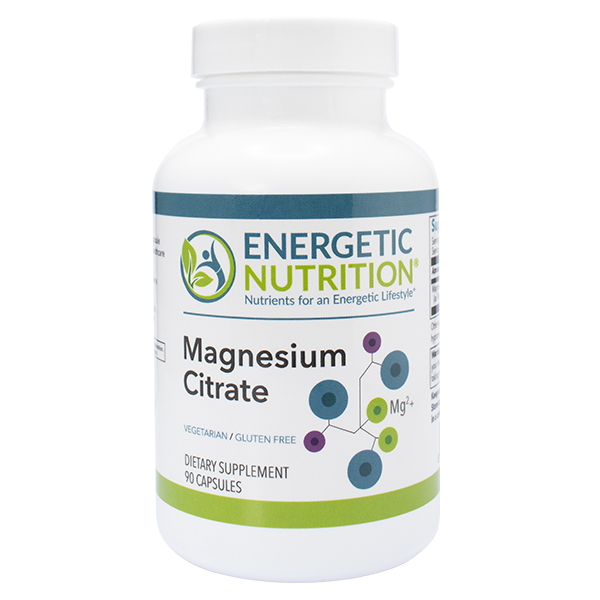
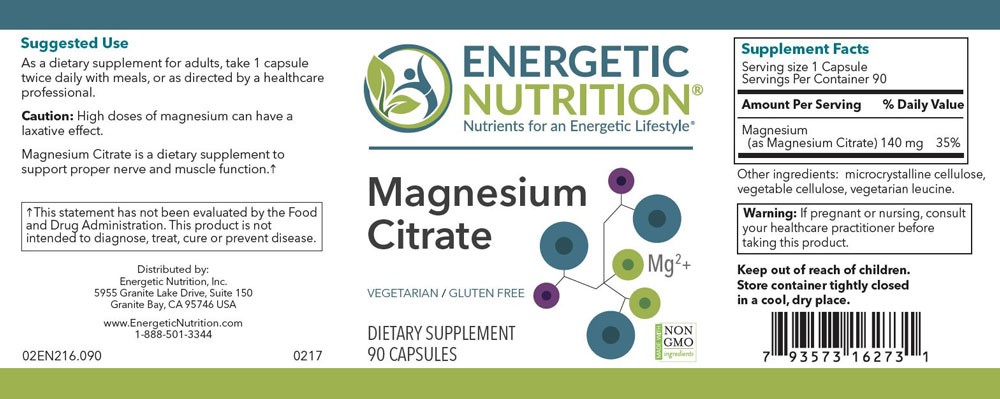 Serving Size: One (1) Capsule
Servings per Container: 90 Vegetarian Capsules
Amount per Serving: 140 mg. Magnesium (as Magnesium Citrate)
35% Recommended Daily Value (RDA).
Click to view entire label
Other ingredients:Microcrystalline cellulose, vegetable cellulose, vegetarian leucine.
This product is vegetarian and free of citrus, corn, egg, gluten, milk, sodium, wheat, yeast, added sugars, synthetic dyes, artificial flavorings and preservatives.
Warning: If pregnant or nursing, consult your healthcare practitioner before taking this product.
Keep out of reach of children. Store container tightly closed in a cool, dry place.
As a dietary supplement for adults, take 1 capsule twice daily with meals, or as directed by a healthcare professional. High doses of magnesium can have a laxative effect.
When using magnesium to help reduce calcification of a fibroid, a suggested usage is as follows:
Start with two capsules of Magnesium Citrate (approximately 140 mg per capsule) at night before bed. The next night add one capsule, and then one capsule subsequently per night until you have diarrhea or loose stools the next day. At that point reduce by one capsule each evening until the loose stools stop. This quantity would then be your personal magnesium citrate level. This is the maximum level for you that will not cause loose stools.
Warning: If you are pregnant, breastfeeding, or have kidney disease, consult your healthcare professional before using. As always, check with your healthcare professional before taking more than the recommended dosage shown on the bottle of any nutritional supplement.
Contraindicated with use of aluminum containing drugs.
Magnesium should not be used by those with renal failure. It is also not recommended for those with high-grade atrioventricular (AV) blocks, unless they have a pacemaker. Please consult with your healthcare professional if you have this condition and/or a pacemaker. Pregnant women and nursing mothers should consult with their doctor prior to taking additional magnesium.
Those with myasthenia gravis should avoid the use of magnesium supplements, which may exacerbate weakness and trigger a myasthenic crisis.
† These statements have not been evaluated by the U.S. Food and Drug Administration (FDA) or EnergeticNutrition.com. This product is not intended to diagnose, treat, cure or prevent any disease. The information provided on this site is for informational purposes only and is not intended as a substitute for advice from your physician or other health care professional or any information contained on or in any product label or packaging. You should not use the information on this site for diagnosis or treatment of any health problem or for prescription of any medication or other treatment. You should consult with a health care professional before starting any diet, exercise or supplementation program, before taking any medication, or if you have or suspect you might have a health problem, or are pregnant. When you receive an item, carefully read all labels, warnings, and directions before use. Actual product packaging and materials may contain more and/or different information than shown on this website.
|
|


NUTRITIONAL AND PERSONAL CARE PRODUCTS DISCLAIMER: Content on this site is for reference purposes and is not intended to substitute for advice given by a physician, pharmacist, or other licensed health-care professional. You should not use this information as self-diagnosis or for treating a health problem or disease. When you receive an item, carefully read all labels, warnings, and directions before use. Actual product packaging and materials may contain more and/or different information than shown on this website. Contact your health-care provider immediately if you suspect that you have a medical problem. Information and statements on this website regarding dietary supplements have not been evaluated by the Food and Drug Administration, and are not intended to diagnose, treat, cure, or prevent any disease or health condition. *Results May Vary. USE OF THIS SITE: By using this site, you signify your assent to our Terms and Conditions Agreement, Privacy and Security Policy Agreement, Shipping and Ordering Policy and International Shipping and Ordering Policy. Please read them all carefully. If you do not agree to the terms and conditions contained in these policies, you may not access or otherwise use this site. These Agreements apply to any transaction or relationship between the parties, including those related to the use of this website and/or the purchase and sale of merchandise through this website or from Energetic Nutrition, Inc. by other means, including email, telephone, or live chat communication, social media postings, and postings of reviews to the EnergeticNutrition.com website. |
|||||||

|

|
|

|
|

|
||